
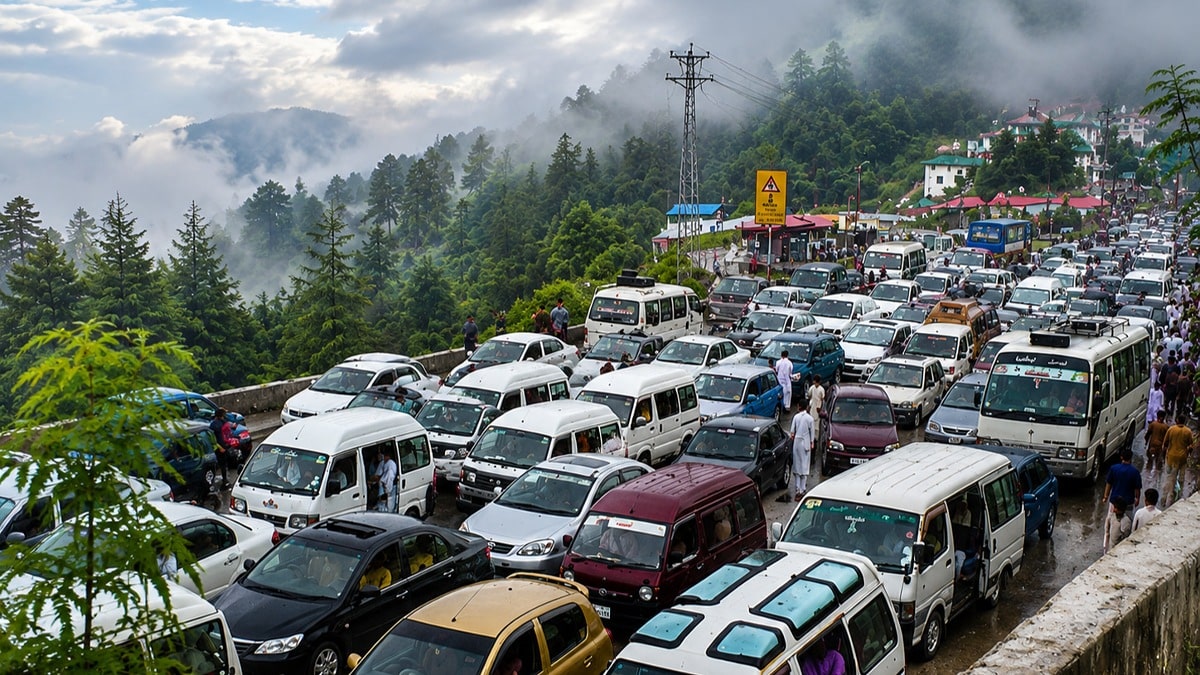
The number of vehicles in Pakistan has increased by more than 770% over the past 35 years, rising from 4.47 million in 1990 to over 39 million in 2025, according to a recent study by the Pakistan Institute of Development Economics (PIDE).
The study, titled More Vehicles, Less Mobility: Understanding the Urban Transport Paradox in Pakistan, was authored by Raheel Hasan Qadar and Irem Batool. It found that the increase was largely driven by private vehicles rather than public transportation.
According to the findings, private vehicles, including cars, motorcycles, and jeeps, increased from 1.42 million in 1990 to 35.87 million in 2025.
In comparison, public transport vehicles, including buses, vans, and rickshaws, along with other vehicle categories, remained relatively stable at around three to four million.
The researchers identified easier access to auto financing as a major factor behind the increase, allowing more households to purchase vehicles through installment payments. Vehicle ownership grew particularly rapidly after 2015, coinciding with a sharp rise in consumer financing.
The growing number of vehicles has also contributed to worsening air pollution in major cities, including Karachi, Lahore, Islamabad, and Rawalpindi.
Road transport carbon dioxide emissions increased from approximately 13.8 million tonnes in 1990 to 43.6 million tonnes in 2023. Emissions temporarily declined during the COVID-19 lockdowns in 2020 and again in 2022 due to widespread flooding and rising petroleum prices, before rebounding to new highs.
The study found that transport accounts for approximately 81.3% of Lahore’s estimated carbon monoxide emissions, while poor air quality is estimated to reduce average life expectancy in the city by around seven years.
Transport also accounts for approximately 53% of emissions in Islamabad-Rawalpindi, 51% in Peshawar, and 33% in Karachi.
The researchers warned that widening roads and constructing more flyovers may encourage greater private vehicle use instead of reducing congestion.
They added that such projects could increase travel distances, contribute to urban sprawl, and worsen inequalities for people who rely on public transportation.
The post Number of Vehicles in Pakistan Increases by Over 770% in 35 Years appeared first on ProPakistani.