
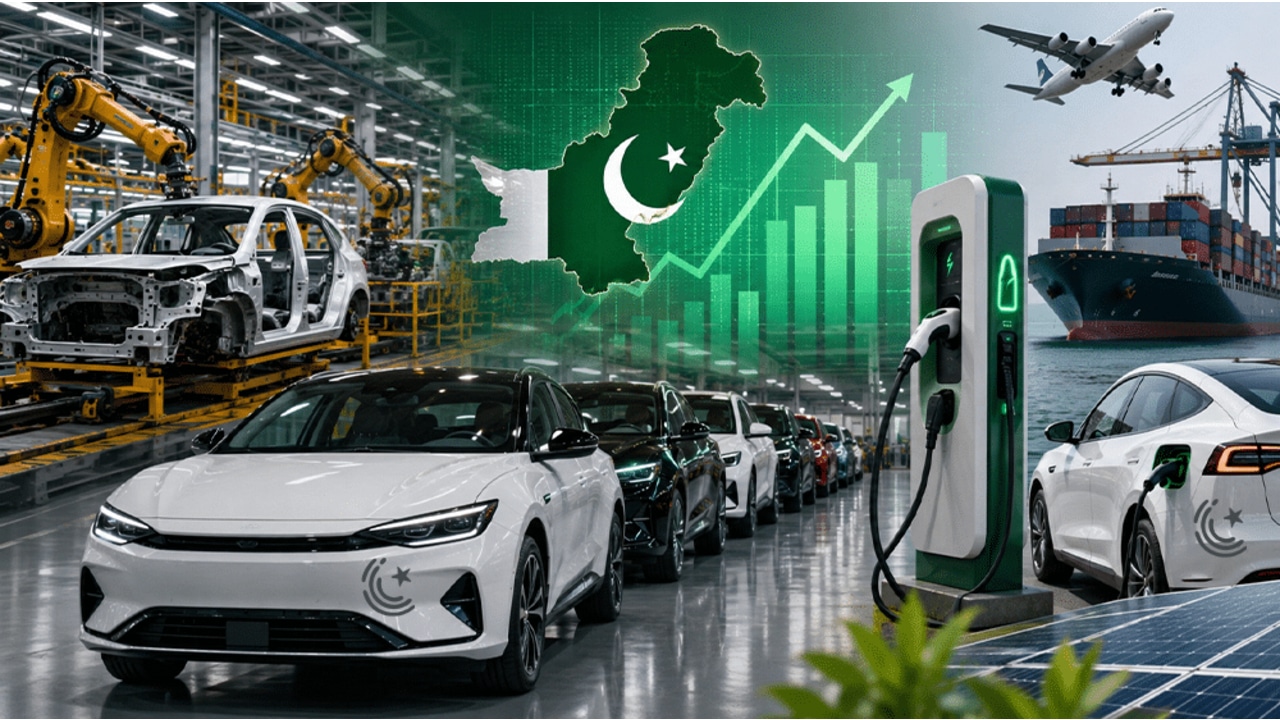
Pakistan’s proposed Auto Policy 2026–31 outlines a revised sales tax structure for battery electric vehicles, range-extended electric vehicles, plug-in hybrids, conventional hybrids, and petrol-powered vehicles.
The draft proposes different tax rates based on vehicle powertrain technology, with the aim of encouraging new energy vehicles while revising the tax treatment of conventional cars.
|
Powertrain |
Current |
Proposed |
|---|---|---|
|
BEV |
1% |
No change |
|
REEV |
1% |
6% |
|
PHEV |
||
|
Up to 2,000cc |
18% |
9% |
|
Above 2,000cc |
25% |
9% |
|
HEV |
||
|
Up to 2,000cc |
18% |
No change |
|
Above 2,000cc |
25% |
No change |
|
ICE |
||
|
Up to 1,400cc |
18% |
No change |
|
1,400 to 2,000cc |
25% |
18% |
|
Above 2,000cc |
25% |
No change |
According to a comparison of existing and proposed rates in the draft policy, the sales tax on PHEVs with engine capacities of up to 2,000cc would drop from 18% to 9%. For PHEVs above 2,000cc, the rate would fall from 25% to 9%.
The proposed changes would also reduce the sales tax on ICE vehicles with engine capacities ranging from 1,400cc to 2,000cc from 25% to 18%. However, the rate for ICE vehicles up to 1,400cc would remain unchanged at 18%, while vehicles above 2,000cc would continue to face a 25% rate.
In contrast, REEVs would face a higher sales tax under the proposed policy. Their rate would increase from 1% to 6%, marking a five-percentage-point rise. Meanwhile, battery electric vehicles (BEVs) would retain their existing 1% sales tax rate.
For hybrid electric vehicles (HEVs), the draft proposes no change. The sales tax would remain at 18% for vehicles with engine capacities of up to 2,000cc and 25% for those above 2,000cc.
via: PakWheels
The post Breakdown of New Sales Tax Rates in Upcoming Auto Policy appeared first on ProPakistani.