

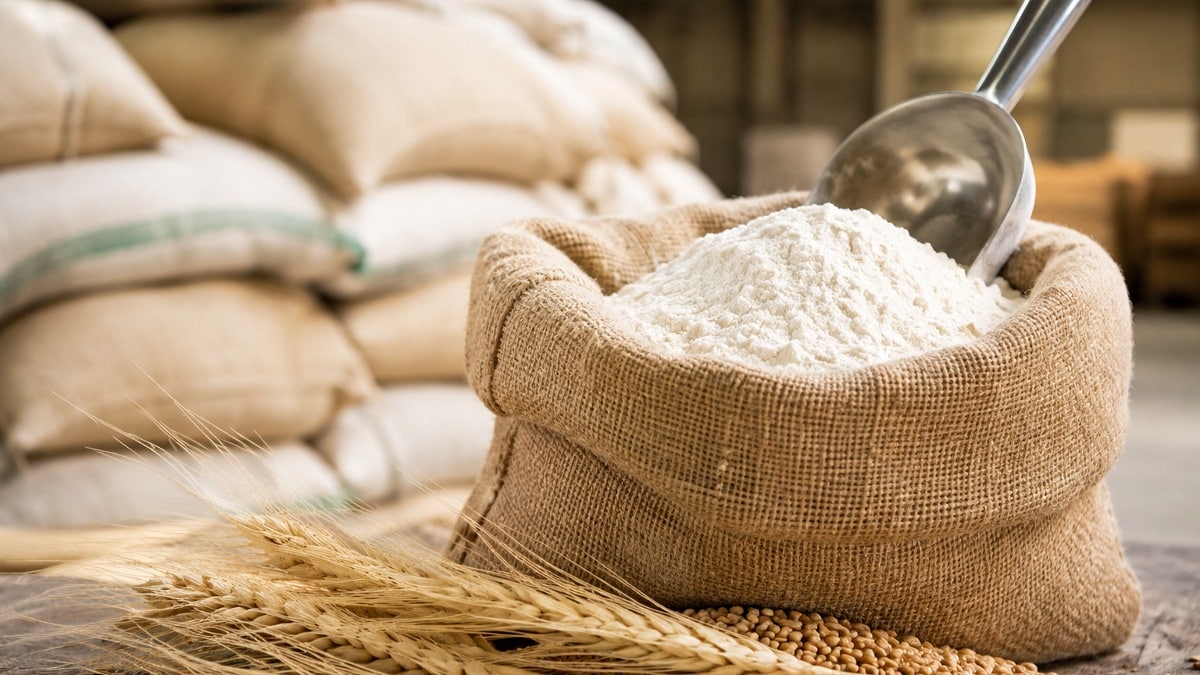
The arrival of imported wheat has lowered grain prices in Pakistan’s open market, but consumers continue to pay high rates for flour and baked goods, with retail prices remaining largely unchanged despite a recent reduction in mill prices.
The first shipment carrying 51,000 tonnes of imported wheat arrived at Karachi Port on October 28, bringing open-market wheat prices down to Rs. 130 per kilogram from Rs. 140. Another vessel carrying 58,132 tonnes is scheduled to arrive on Tuesday, November 3.
However, wheat prices have continued to fluctuate. Wholesalers quoted an average rate of Rs. 132 per kg, while flour millers said prices ranged between Rs. 136 and Rs. 137 per kg.
Flour Mill Prices Fall, but Consumers Get No Relief
Flour millers had increased prices of different flour varieties by Rs. 20 per kg before reducing them ahead of the arrival of imported wheat. A miller said mills lowered prices on October 28, two days before the shipment arrived.
The latest mill prices for flour No. 2.5, maida and fine flour stand at Rs. 156, Rs. 168 and Rs. 171 per kg, respectively. During the first week of October, the same varieties were priced at Rs. 161, Rs. 173 and Rs. 176 per kg.
Despite the reduction, retail prices have remained unchanged. Flour No. 2.5 and maida are selling at Rs. 170 to Rs. 180 and Rs. 185 to Rs. 190 per kg, respectively, while fine flour is priced at Rs. 185 to Rs. 190 per kg.
LPG Costs Offset Lower Flour Prices
Prices of chapati, naan, sheermal, taftaan and qulcha have also remained unchanged at Rs. 20, Rs. 30 to Rs. 35, Rs. 100 to Rs. 110, and Rs. 90 to Rs. 100, respectively.
A tandoor owner said the high cost of liquefied petroleum gas (LPG), which ranges from Rs. 500 to Rs. 550 per kg, has offset the impact of lower flour prices. He warned that further increases in LPG prices could make it difficult for tandoor operators to sustain their businesses.
Wholesaler Rauf Ibrahim said regulators had failed to control inflated retail prices despite the decline in open-market wheat rates. He also warned that the planned import of 750,000 tonnes of wheat would be insufficient, as Pakistan needs more than 2 million tonnes to bridge the supply-demand gap until the next crop arrives from Sindh and Punjab between March and May.
Ibrahim urged the government to allow private-sector companies and flour millers to import wheat to help stabilize flour prices. He added that workers earning less than Rs. 50,000 a month were struggling to cover food expenses, leaving little for their children’s education and other needs.
Karachi and Hyderabad Face Highest Flour Prices
According to the Sensitive Price Index for the week ending October 29, Karachi and Hyderabad have the highest flour prices among major cities.
A 20kg flour bag costs up to Rs. 3,540 in Karachi, compared with an average of Rs. 3,200 in other parts of the country. In Hyderabad, the price ranges from Rs. 3,360 to Rs. 3,400.
In Islamabad, Rawalpindi, Lahore and other major cities in Punjab, 20kg flour bags are priced between Rs. 2,200 and Rs. 3,333. Sukkur recorded the highest price for a 10kg wheat bag at Rs. 1,488, followed by Peshawar at Rs. 1,469 and Hyderabad at Rs. 1,453. Karachi’s rate stood at Rs. 1,440, while Islamabad and Rawalpindi averaged Rs. 1,453.
Sargodha had the lowest 10kg wheat bag price at Rs. 1,223, followed by Bahawalpur at Rs. 1,266. Faisalabad and Sialkot recorded rates of Rs. 1,300.
For fine flour, Hyderabad and Quetta reported the highest price at Rs. 187 per kg, followed by Karachi at Rs. 185 and Islamabad at Rs. 183. Prices in other cities ranged from Rs. 147 to Rs. 180 per kg. A flour miller said Karachi’s high prices were partly due to the city’s dependence on wheat supplies from other parts of Sindh, as it is not a wheat-growing area.
The post Wheat Imports Fail to Provide Relief in Flour Prices appeared first on ProPakistani.