
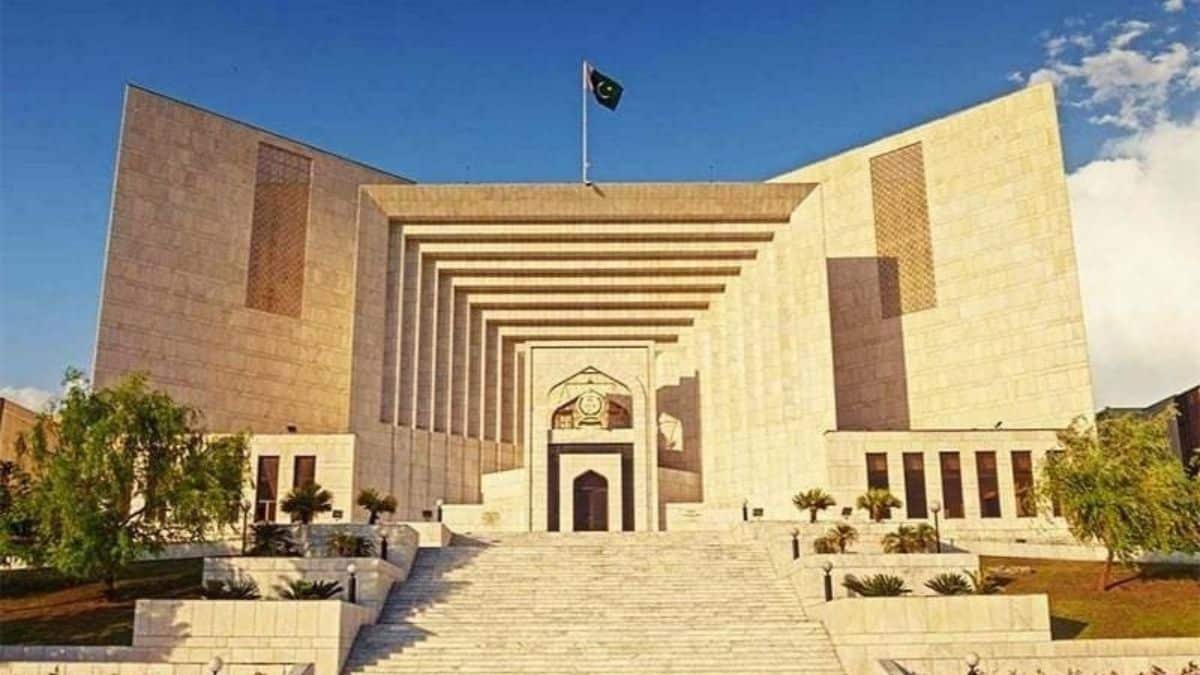
The Supreme Court has ruled that a marriage can be dissolved on the grounds of shiqaq, or marital discord, under the residuary provision of the Dissolution of Muslim Marriages Act, 1939, even if cruelty is not proven.
A five-member appellate bench headed by Justice Shahid Waheed and comprising Justices Naeem Akhter Afghan, Muhammad Hashim Khan Kakar, Ishtiaq Ibrahim and Miangul Hassan Aurangzeb announced the judgment on Wednesday.
The court decided connected petitions filed by Zainab Bibi and Imran Naz Begum against separate orders of the Peshawar High Court.
The cases arose from two separate family suits in which the wives sought dissolution of marriage on grounds of cruelty along with claims for maintenance, dower and dowry articles.
The family courts, after following the procedure under the Family Courts Act, 1964, held that cruelty had not been established. However, they dissolved the marriages through khula after reconciliation failed and directed the wives to return or surrender the dower. The appellate court and the Peshawar High Court largely upheld those decisions.
The Supreme Court said a marriage may be dissolved by a court, but neither spouse should be deprived of a lawful right or burdened with a stigma without legal and evidentiary basis.
It said khula and dissolution under the Dissolution of Muslim Marriages Act are distinct legal remedies, although both may end a marriage. The court noted that section 2 of the 1939 Act gives a Muslim woman the statutory right to seek dissolution on specified grounds, including cruelty.
The bench held that the family courts erred in converting the petitions for dissolution on the ground of cruelty into decrees of khula without obtaining the petitioners’ clear and voluntary consent.
It said those decrees could not be sustained to the extent they were based on khula. However, the court also said the record did not justify setting aside the dissolution altogether.
The judgment said the matrimonial relationships had suffered a serious and continuing breakdown, reconciliation had failed, and the evidence did not establish cruelty. It added that the record as a whole showed shiqaq of the kind recognised under Muslim law and contemplated by verse 35 of Surah An-Nisa, bringing the cases within section 2(ix) of the 1939 Act.
The court therefore held that the dissolution could lawfully stand, but on a legal basis different from that adopted by the family courts.
It ruled that the marriages were liable to dissolution on the ground of shiqaq under section 2(ix) of the Dissolution of Muslim Marriages Act, 1939, and not on the basis of khula.
The court also set aside the directions requiring the petitioners to return, surrender or waive their dower as a consequence of khula. Their entitlement to dower will now be determined under the law and the findings otherwise supported by the record.
Findings relating to maintenance and dowry articles were left undisturbed, as the court found no legal or evidentiary error warranting interference under Article 199 of the Constitution.
The judgment observed that family litigation should not become a contest in which one spouse must be judicially disgraced for the other to obtain relief.
The post Supreme Court Rules Marriage Can End on Grounds of Shiqaq appeared first on ProPakistani.