
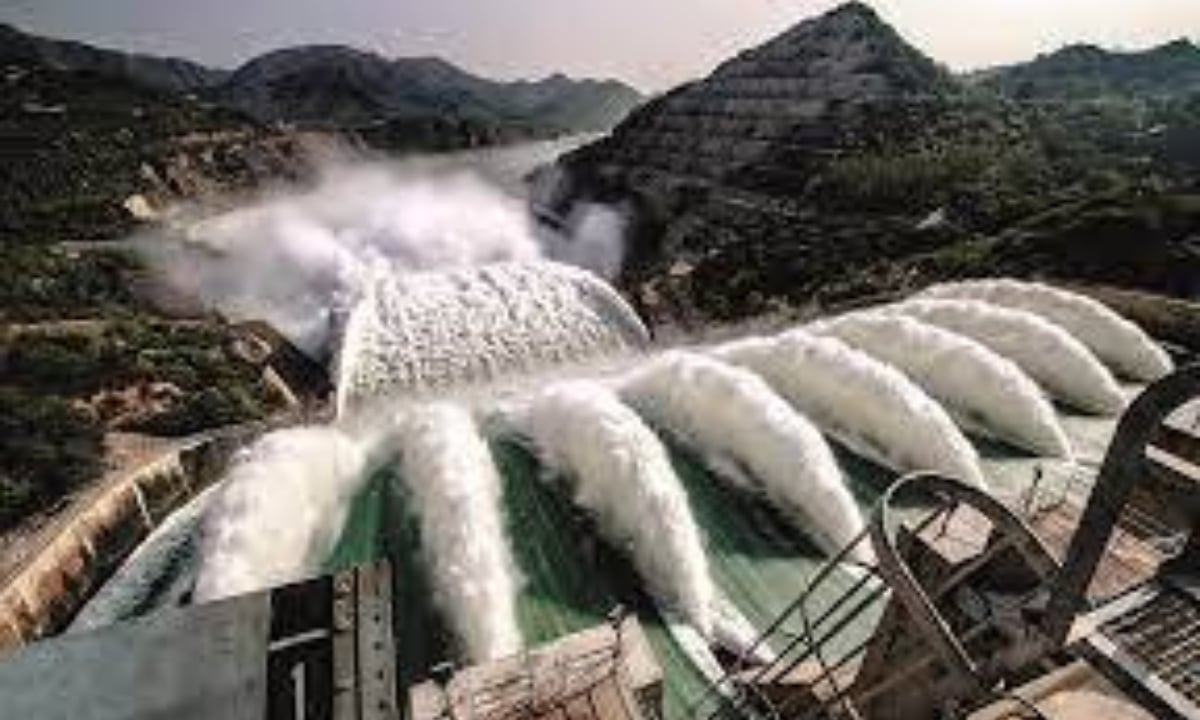
Pakistan’s major water reservoirs have collectively reached 9.466 million acre-feet (MAF), filling about 72% of the country’s total storage capacity, with Tarbela Dam nearing full capacity ahead of the peak irrigation season.
According to official water data released on Sunday, the country’s total reservoir storage has climbed to 9.466 MAF against a combined capacity of 13.149 MAF. The Indus River System is currently receiving 401,600 cusecs of inflows, while regulated outflows stand at 304,700 cusecs.
Tarbela Dam continues to lead the recovery, holding 5.063 MAF of water, or 90.72% of its total storage capacity of 5.58 MAF. The reservoir is receiving 219,700 cusecs of inflows against releases of 162,000 cusecs, supported by glacier melt and monsoon rains in the upper Indus basin.
Chashma Barrage is also nearing full capacity, with storage reaching 0.285 MAF, equivalent to 91.64% of its maximum capacity.
In contrast, Mangla Dam remains well below its seasonal benchmark. The reservoir is currently 56.74% full, as relatively weak rainfall across the Jhelum catchment has limited inflows to 46,200 cusecs. Water managers have reduced releases to 7,000 cusecs in an effort to conserve water.
Across the irrigation network, authorities are diverting 354,600 cusecs of water to support Kharif crops, including cotton, rice and sugarcane. Sindh is receiving 195,000 cusecs, Punjab 145,000 cusecs, Balochistan 12,000 cusecs, and Khyber Pakhtunkhwa 2,500 cusecs.
The data also shows that 0.532 MAF of water has been released downstream of Kotri Barrage into the Arabian Sea since the beginning of the Kharif season to help limit seawater intrusion and protect the Sindh delta.
Water authorities will continue monitoring monsoon activity through mid-August, with additional rainfall over the Jhelum basin considered important for raising Mangla Dam’s storage before the Rabi sowing season begins.
The post Pakistan’s Major Dams Reach 72% Storage as Tarbela Nears Full Capacity appeared first on ProPakistani.