

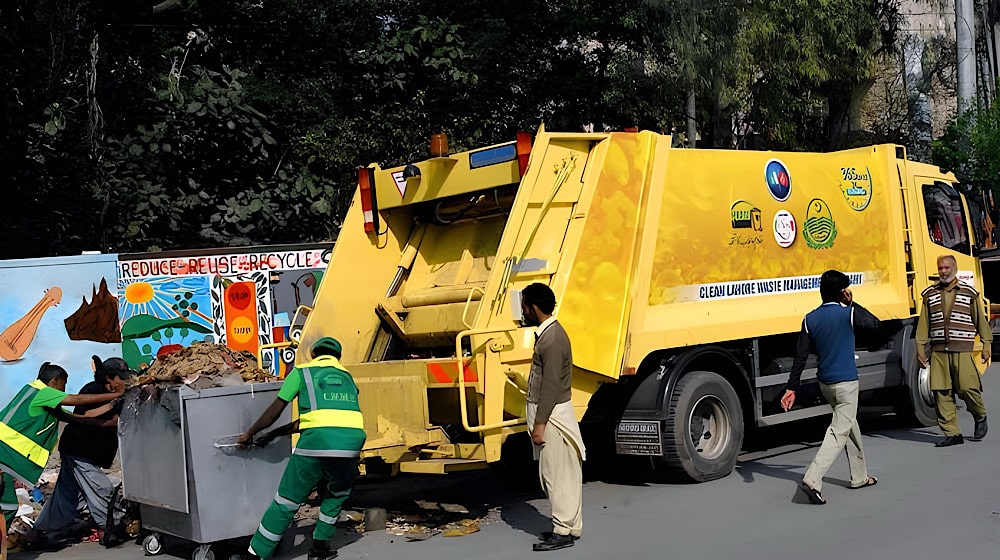
The Punjab Chief Minister Inspection Team (CMIT) has flagged serious administrative and operational deficiencies in the functioning of the Lahore Waste Management Company (LWMC), recommending a special audit focusing on fuel consumption, vehicle mileage and expenditure on machinery repairs and maintenance following surprise inspections of the Suthra Punjab Programme.
The inspection report, submitted by the CMIT, identified gaps in vehicle maintenance records, discrepancies between workshop records and the vehicle tracking system, and a significant number of nonfunctional vehicles.
The findings prompted the Punjab chief minister to direct the administrative department to address the deficiencies and take corrective action, with particular emphasis on conducting a special audit of LWMC.
Reportedly, the Auditor General of Pakistan has asked for an audit team to be deployed at the earliest to examine the company’s fuel consumption, mileage, and repair and maintenance expenses.
Discrepancies in Vehicle Tracking Raise Questions
One of the key observations in the inspection report concerns inconsistencies between the vehicle tracking system and records maintained at LWMC’s workshops.
During a visit to the company’s control room, the inspection team checked the real time locations of various vehicles, including compactors, loader rickshaws, containers, mechanical sweepers, and washers.
Vehicles that had reportedly been parked at workshops for repairs for approximately 15 days were shown as “nonreporting” by the tracking system for around two months, sources added.
The discrepancy between the reported workshop stay and the period recorded by the tracking system could not be explained during the inspection, prompting the CMIT to call for reconciliation of the two sets of records.
Vehicles Remain Nonfunctional for Months
The inspection team also examined vehicles parked at the Outfall Road and Thokar parking yards and workshops, where it found that some vehicles had remained nonfunctional for months.
The Deputy Chief Executive Officer of LWMC informed the team that the company itself carried out vehicle repairs and maintenance.
The report also records that a number of unserviceable vehicles were lying in parking yards and workshops.
According to the explanation provided by LWMC officials, most of these vehicles had been handed over by the predecessor company, Al Burak, in 2021.
The Deputy CEO further stated that Electronic Control Modules (ECMs) had been removed by the predecessor company, rendering the vehicles nonfunctional.
LWMC officials informed the inspection team that 291 vehicles had been proposed for auction. The auction process, they said, had previously been held up because of litigation involving international contractors, but the matter had recently been decided.
The inspection report recommends expediting the disposal of condemned vehicles. The prolonged presence of unserviceable machinery, however, also raises questions about the financial implications of retaining such assets, their assessed value, the cost of repairs, and the circumstances surrounding their continued storage.
Maintenance Records Still Being Kept Manually
Another concern highlighted by the CMIT relates to the absence of a computerized system for recording and monitoring vehicle maintenance.
During the inspection of parking yards and workshops, the team found that records concerning engine oil changes, repairs, and maintenance were being maintained manually.
No computerized or digital vehicle maintenance monitoring system was found in place.
The absence of a centralized digital record may make it difficult to establish the complete maintenance history of individual vehicles, compare repair costs, identify recurring mechanical faults, and verify expenditure against actual work performed.
In view of these shortcomings, the CMIT recommended installing a centralized Vehicle Maintenance Management System (VMMS) to maintain vehicle specific records of repairs, servicing, oil changes, spare parts replacement, and associated costs.
Fuel Consumption and Repair Bills Under Scrutiny
The proposed special audit is the central administrative recommendation arising from the inspection.
The CMIT has specifically called for an examination of LWMC’s fuel consumption, mileage, and expenditure on repairs and maintenance.
In addition to the special audit and installation of a digital maintenance system, the CMIT recommended that the Suthra Punjab Authority introduce an effective monitoring mechanism to check possible fuel pilferage and expenditure incurred on vehicle repairs and maintenance.
Sources told ProPakistani that the chief minister has directed the administrative department to address the findings and recommendations contained in the inspection report and take further necessary action to rectify the identified deficiencies.
The post 4 Shocking Issues Discovered in Lahore Waste Management Company appeared first on ProPakistani.