

Federal Minister for Planning, Development and Special Initiatives Ahsan Iqbal has called for treating education, health, nutrition, clean drinking water and population growth as a “national emergency” and declared that sustained, coordinated efforts over 10 years are needed to improve social indicators.
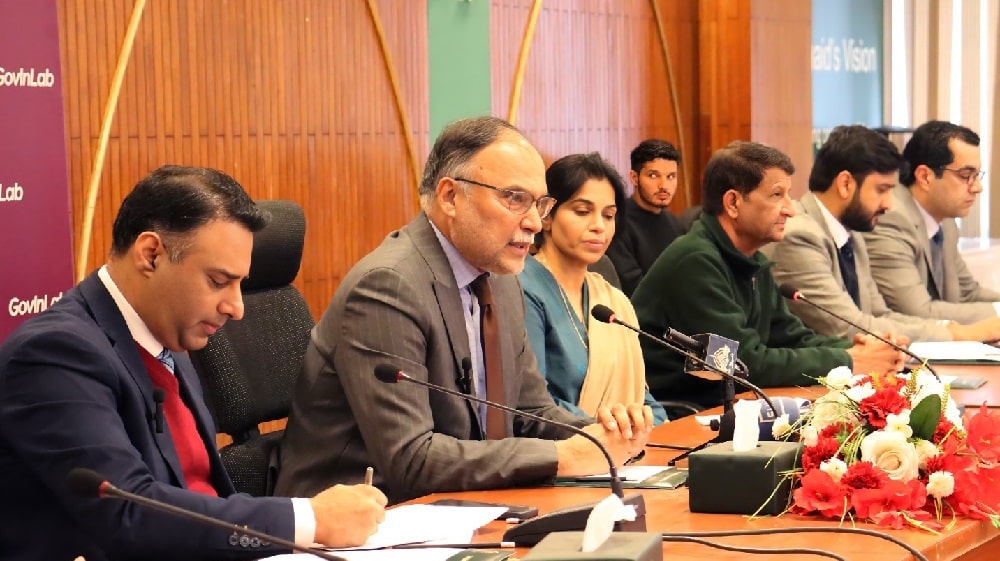
Speaking at the first meeting of the Human Capital and Skills Mission under the Uraan Pakistan framework on October 7, the minister stressed the need to transfer powers to district governments so basic services could reach people at their doorsteps.
The mission is one of 11 national economic missions approved under the framework.
He said Pakistan needed policy continuity and political stability to achieve its long-term development goals. He asked where the country would stand in 2047, when it marks 100 years of independence, and said Pakistan must now win the “battle for development” with the same determination it had shown in its military campaign.
He added that investment in human capital and skills would form the foundation of the country’s future growth.
A briefing at the meeting highlighted Pakistan’s human development challenges. The country ranked 168th among 193 countries on the Human Development Index, while its Human Capital Index score stood at 0.41, indicating that a child born in Pakistan could achieve only 41 percent of their potential productivity.
Child stunting affected 40.2 percent of children, the highest rate in the region, while maternal mortality stood at 186 deaths per 100,000 live births, compared with the Sustainable Development Goal target of 70.
Around 26 million children, or 28 percent of the school-age population cited in the briefing, were out of school. Of every 100 children entering first grade in public schools, only 46 reached grade 10. Literacy rates ranged from 68 percent in Punjab to 49 percent in Balochistan.
The briefing also highlighted gaps in workforce participation and skills. Women’s labor force participation stood at 22.7 percent, compared with 68.7 percent for men. Some 45.4 percent of young women were not in education, employment or training, while only around 11 percent of people received technical and vocational training.
About 2 million young people enter the labor market each year. The briefing also reported that national immunization coverage had risen to 81.3 percent.
Planning Minister said the 18th Amendment had been intended to improve social services, but the failure to devolve authority to the local level had limited progress. He argued that provincial secretaries could not effectively address the needs of entire provinces and called for empowered district institutions, administrative reforms and stronger governance in education, health and other social sectors.
He said the government needed to move beyond planning and focus on implementation, with federal ministries and provincial governments responsible for delivering results.
The federal government’s role would center on setting standards, coordinating policies, meeting international commitments, managing fiscal discussions and consolidating data, while provinces would lead implementation in sectors largely under their jurisdiction.
Under the Uraan Pakistan framework, the mission aims to reduce maternal mortality by 35 percent, cut child stunting and under-five mortality by 18 percent each, raise births attended by skilled personnel to 85 percent, increase education spending to 4 percent of gross domestic product, improve literacy by 10 percent, create 1.5 million jobs annually and increase women’s labor force participation by 17 percent.
The proposed monitoring framework would also include population indicators such as the total fertility rate and contraceptive prevalence rate, while raising health spending to 2 percent of GDP. National targets would be broken down into annual, provincial and regional milestones to track progress.
The meeting also discussed a federal and provincial coordination structure linked to the National Population Council, chaired by the prime minister.
Working groups covering education, health and population, and skills would bring together relevant departments, planning and development bodies, finance departments and development partners.
A separate thematic group would focus on nutrition. The groups would meet every two weeks to address implementation barriers, review progress and align federal and provincial development spending with the mission’s priorities.
The minister said achieving the 11 national economic missions would require the same commitment and hard work Pakistan had demonstrated in completing its nuclear program.
The post Ahsan Iqbal Announces 10-Year Plan to Fix Pakistan appeared first on ProPakistani.