

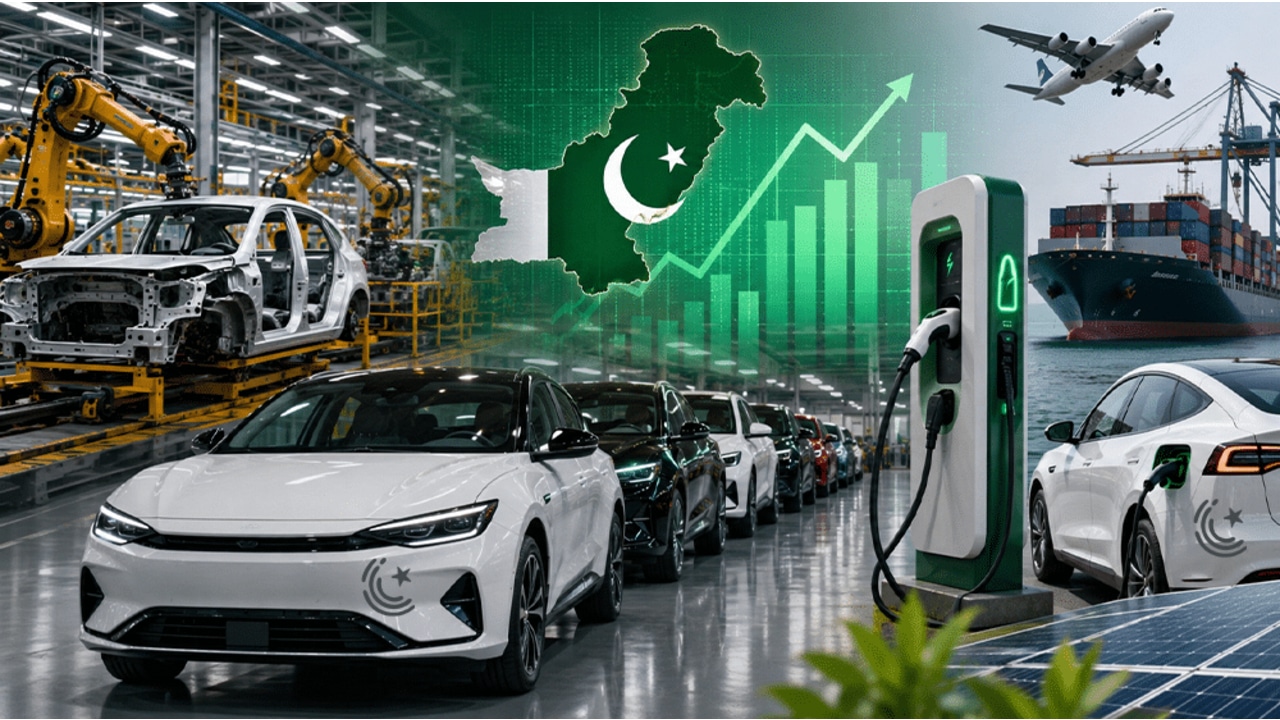
Pakistan can save more than $1 billion in gross fuel imports over five years by adding around 30,000 range-extended electric vehicles (REEVs) to the road each year, research shows.
This means a fleet of 150,000 vehicles. Compared with similar petrol-powered vehicles, the fleet could replace around 1.2 billion liters of petrol and avoid about 2.7 million tons of operational carbon emissions over the period.
The actual savings would depend on factors including vehicle mileage, the source of electricity used for charging and how often the vehicles operate on electric power.
The economic case for electric vehicles has also been highlighted in Future on Wheels, a policy viewpoint published by the Pakistan Institute of Development Economics (PIDE) in December 2024.
It said petroleum imports account for a significant share of Pakistan’s import bill and greater EV adoption could reduce the country’s exposure to fluctuations in international oil prices.
REEVs could provide an intermediate option while Pakistan’s charging infrastructure develops.
REEVs use an electric motor to drive the vehicle. Some current models can travel around 150 to 180 kilometers on battery power under suitable conditions. This means many daily trips can potentially be covered through home charging.
Some users who charge mainly through rooftop solar have reported monthly savings of up to Rs. 65,000 after shifting regular travel from petrol to electricity. Actual savings vary depending on mileage, electricity costs and charging patterns.
Pakistan Customs has classified qualifying REEVs under the tariff category covering vehicles propelled solely by an electric motor.
Electric vehicles are also expanding into lower price segments.
Analysts estimate that raising annual REEV additions to 60,000 could roughly double the projected fuel-saving and emissions benefits, assuming similar operating conditions.
They have called for a stable auto policy covering at least 10 years, along with affordable financing and wider charging infrastructure. They also recommended gradually linking incentives to local production, manufacturing scale and consumer protection.
Manufacturers should compete on vehicle quality, running costs and after-sales service, while government policy should focus on reducing Pakistan’s dependence on imported fuel.
The post Electric Cars Can Save Pakistan $1 Billion appeared first on ProPakistani.