

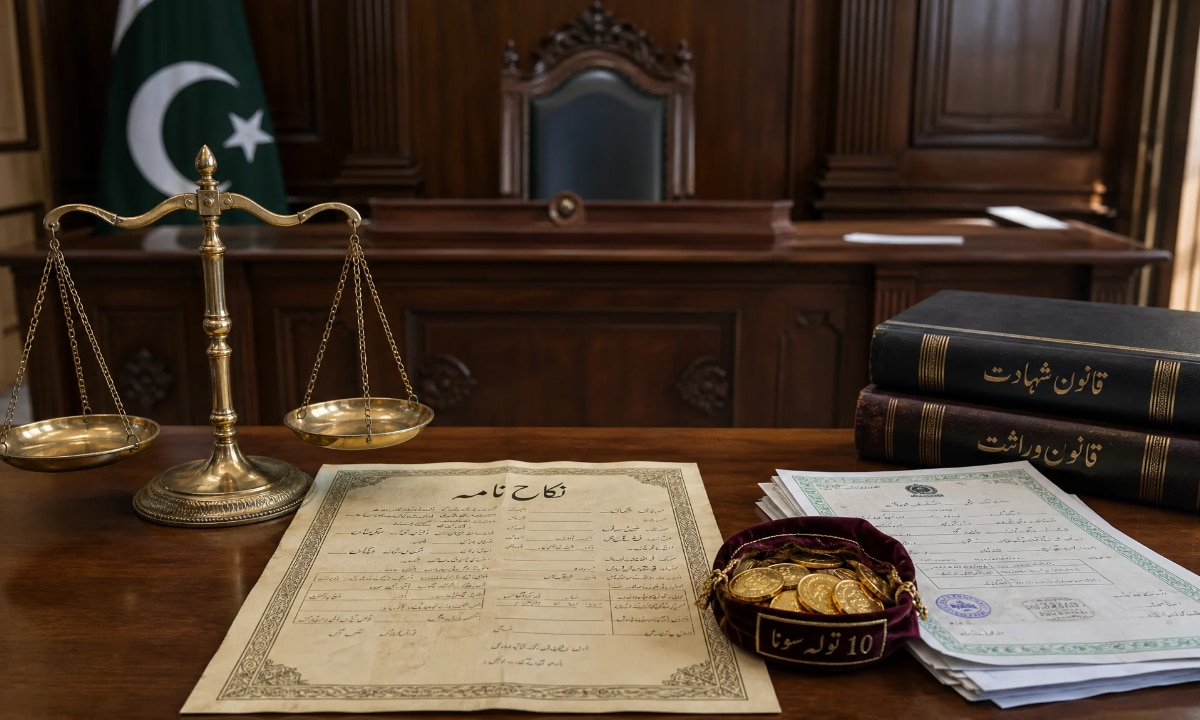
Pakistan’s Supreme Court has ruled that Haq Mahr, or dower, is a mandatory legal right of a wife and cannot be treated as the price of marriage or used by a husband as leverage in marital disputes.
A five-member bench headed by Justice Shahid Waheed issued the ruling while hearing petitions concerning dower-related conditions recorded in nikahnamas.
In its judgment, the court said Haq Mahr is the exclusive property of the wife and must be given by the husband in good faith, according to the terms agreed at the time of marriage.
The Supreme Court also made it clear that payment of dower cannot be linked to a wife’s behavior or made conditional on whether she seeks divorce.
According to the ruling, such conditions undermine the purpose of Haq Mahr and can amount to coercion rather than a genuine marital agreement.
The court said dower is not merely a contractual payment or ceremonial formality but a legally enforceable entitlement arising from marriage under Islamic law.
It further stressed that courts must protect a woman’s right to receive her agreed dower while determining the actual terms of the marriage on the basis of available evidence.
Stricter Rules for Nikahnamas
The judgment also issued important directions regarding the completion of nikahnamas.
Nikah registrars have been instructed to properly fill in all relevant sections of the marriage contract and avoid leaving columns blank without a valid reason.
Particular attention must be given to Columns 13 to 16, which deal with dower.
The total amount or value of Haq Mahr must be clearly recorded, including any money, movable assets or immovable property agreed between the parties.
If property is included as part of the dower, sufficient details must be entered to clearly identify it, including its description, location, measurements and agreed value where applicable.
Registrars must also explain the relevant entries to both parties before obtaining their signatures or thumbprints, particularly where the nikahnama contains clauses relating to dower, property, special conditions or delegated divorce rights.
The court further directed Union Council authorities to ensure that nikah registrars understand their legal responsibilities through regular training and monitoring.
Authorities have also been told to inspect marriage registers periodically and take legal action against registrars who fail to perform their statutory duties.
The post Supreme Court Rules Haq Mahr is Wife’s Legal Right appeared first on ProPakistani.